Project Management Week 3 (32541)
Scope Management
Scope: the definition and description of the end result or mission of project in specific, tangible and measurable terms. It claries the expectations of the stakeholders.
Scope management consists of a series of planning, organising and monitoring/controlling activities
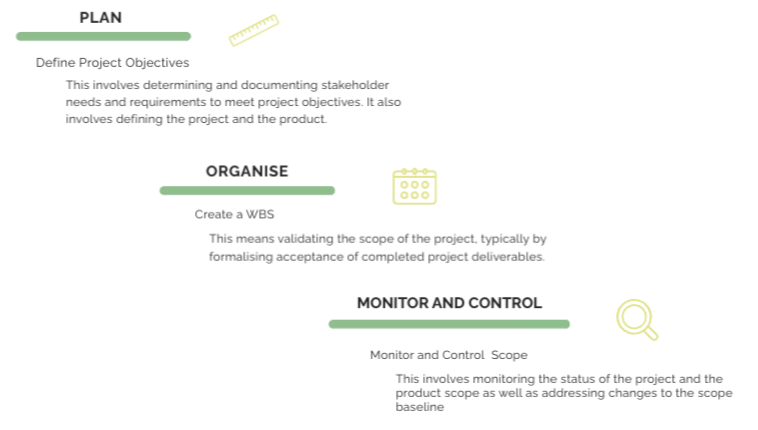
Why manage scope?
A project’s scope defines the boundaries of the project and provide the basis for all subsequent steps in project planning and execution cycles.
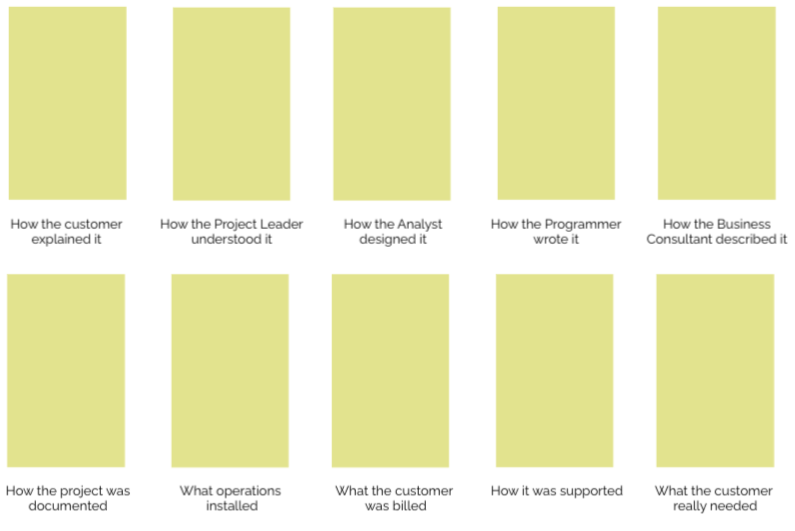
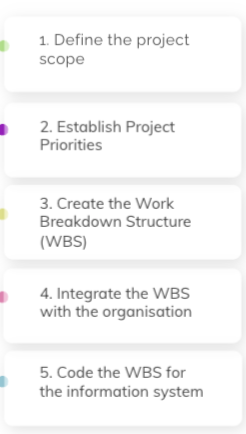
How to manage scope?
Scope management: process of creating a scope management plan that documents how the project scope will be defined, validated and controlled.
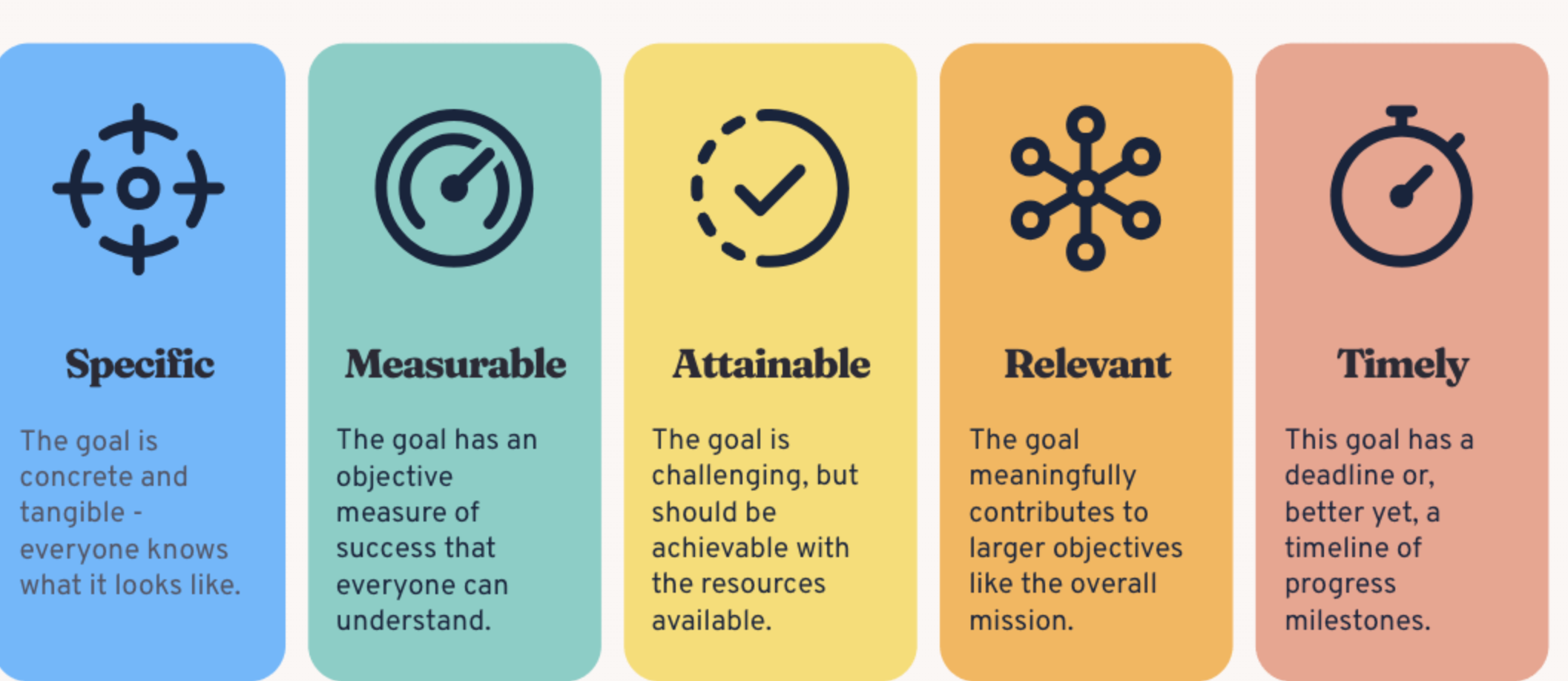
SMART objectives
Deliverables
Define expected outputs over the life of the project. (Tangible, verifiable products)
Agile
Escient guest speaker: Jen Dolden, Victor de Blecourt
Case study healthcare.gov
health insurance marketplace supporting Obama’s medicare roll-out which launched 2013.
Register -> Verify -> Shop -> Determine subsidy -> Enroll
Dev cost: $840 mil USD 55 contract firms involved 4 million unique visitors, only 6 enrolled 1% was able to enroll in 1st week many security issues, confusing site was taken down after 1 week
healthsherpa.com
Start up website initially focused on core scope only, allowed users to compare different plans and purchase to go directly on their website,
3 team members released after 1 month, helped more than million people.
This was way more successful and executed way better.
Why did it fail
Waterfall approach too many stakeholders outsource partners tried to do everything at once not enough testing big-bang release no clear leadership lack of end to end operational view of critical path
What is agile?
Iterative approach delivering project, that priorities delivering value and continuous improvement.
It’s also a mindset, way of working, based on a set of values and principals
delivering customer value early and often cross-functional collaboartion continuous improvement
History
Originated in software dev, and its values and principals were summarised in Agile Manifesto in 2001
Reaction to the waterfall approach that missed the adaptability to keep up with the speed of change in software dev.
Is now also used outside of IT, became a way of working in many divisions in organisations.
Values
4 values and 12 principles support the agile delivery practices
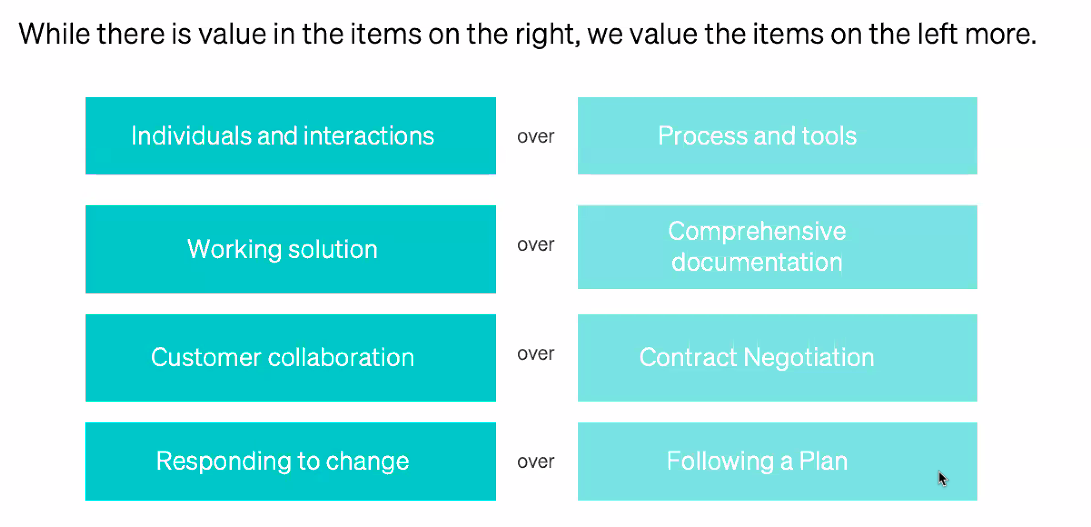
Left > Right
Principles
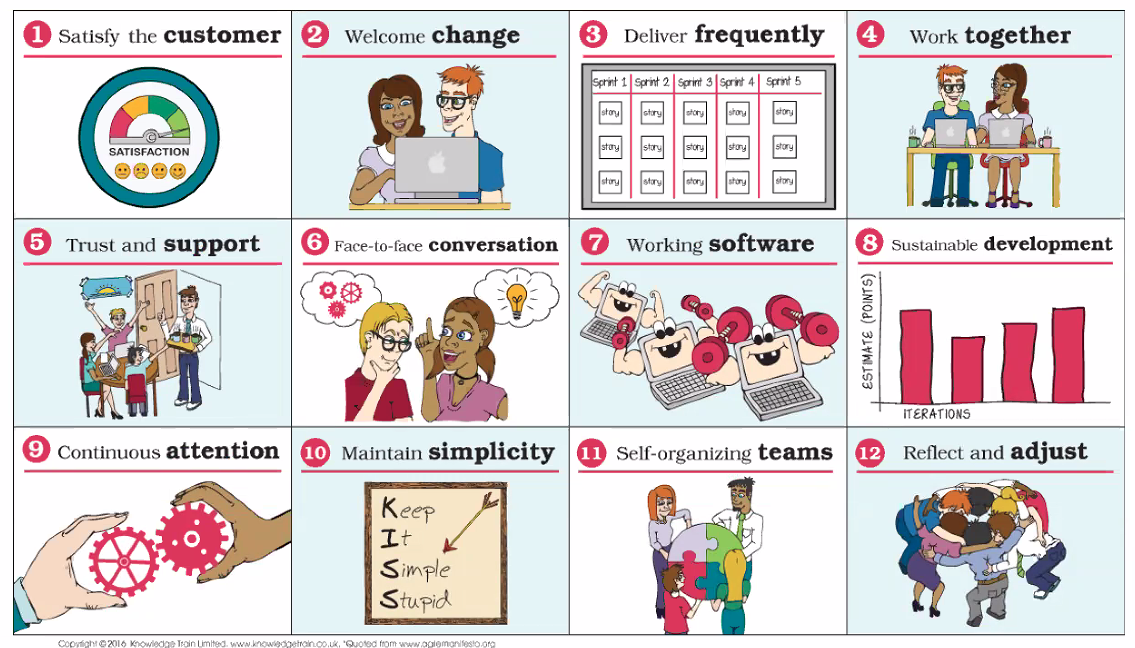
Common frameworks
Kanban
focused on real-time communication of capacity and full transparency of work, work items are represented visually allowing team to see the state of every piece of work at any time.
Scrum
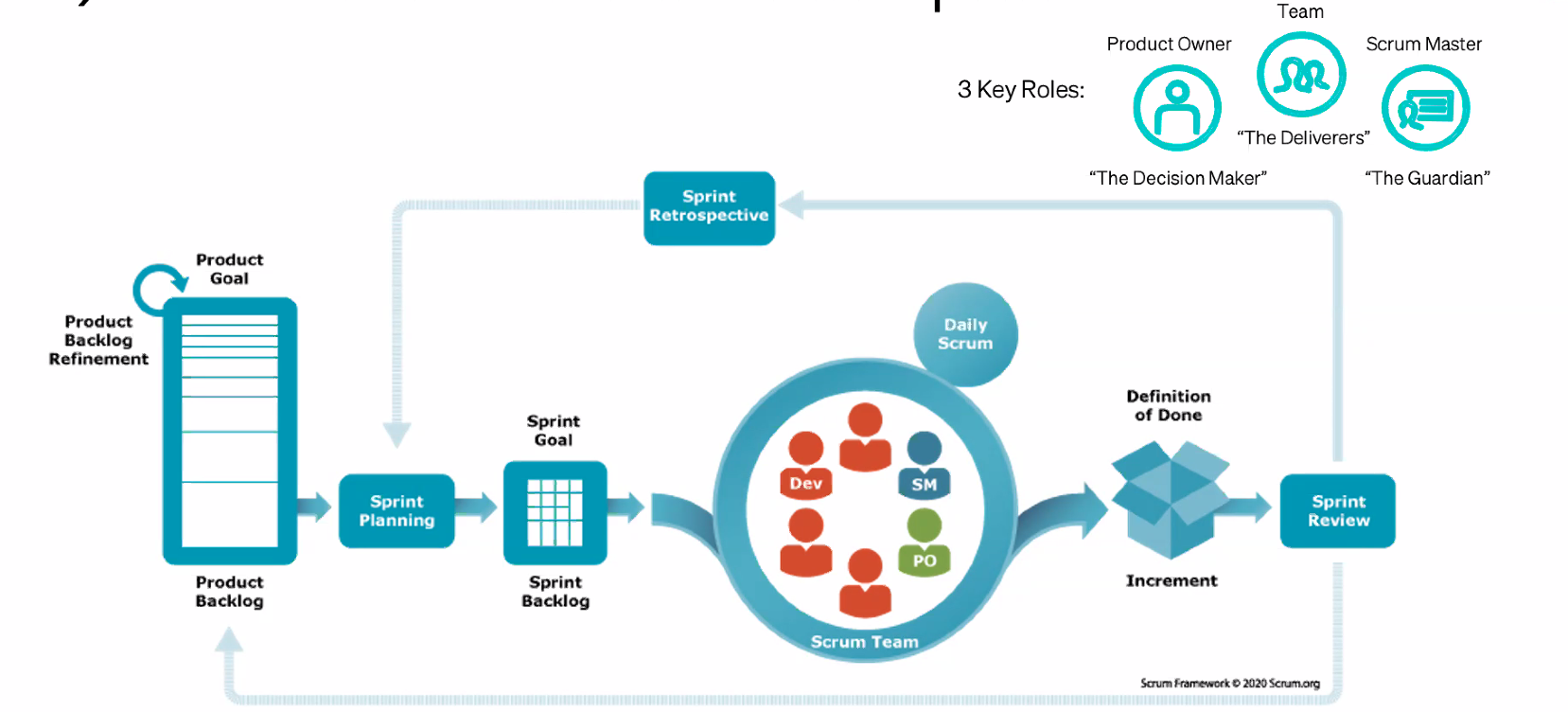
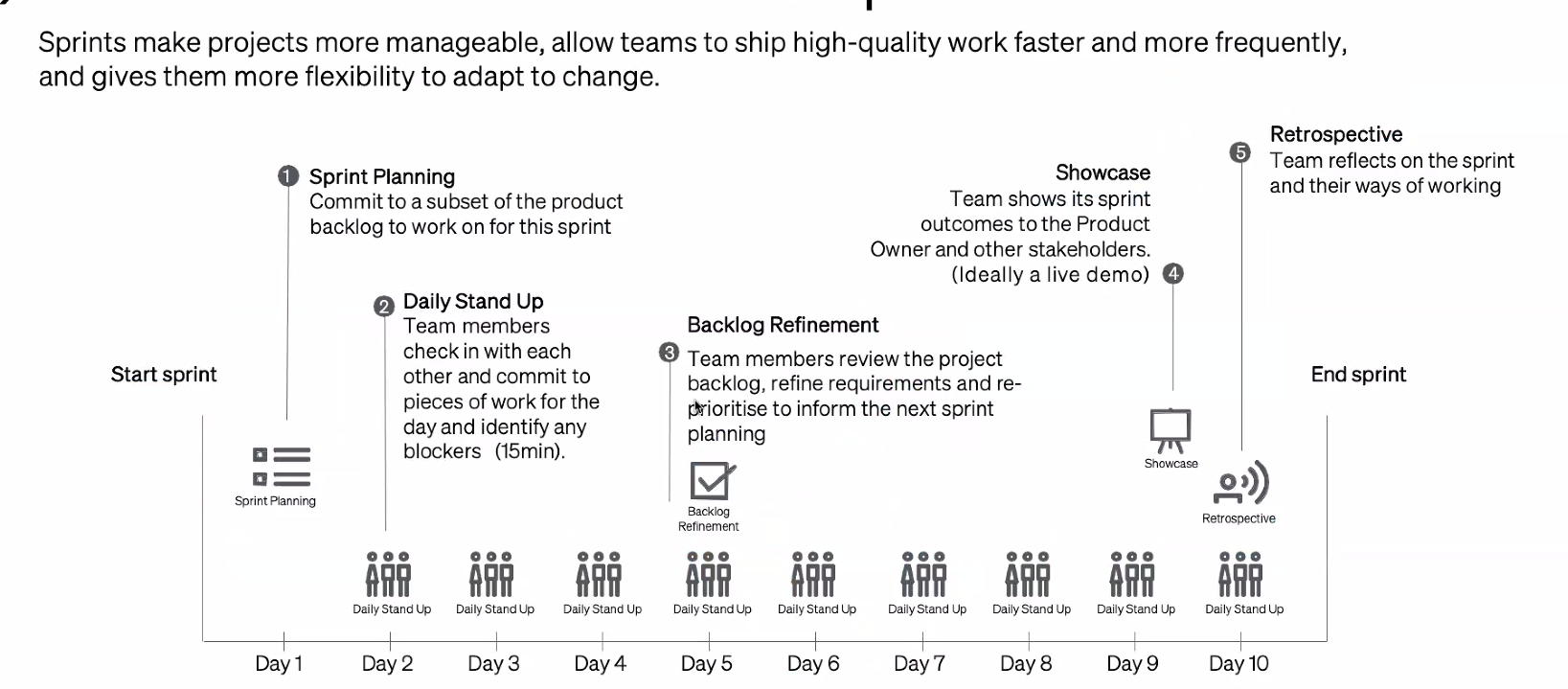
cross-functional teams come together and create backlog and work in sprints, self-organise while working towards a goal, and reflect on their wins and losses to continuously improve.
SAFe
Scaled Agile Framework is a set of organisation and workflow patterns intended to guide enterprises in scaling agile practices.
(Need training to work with this)
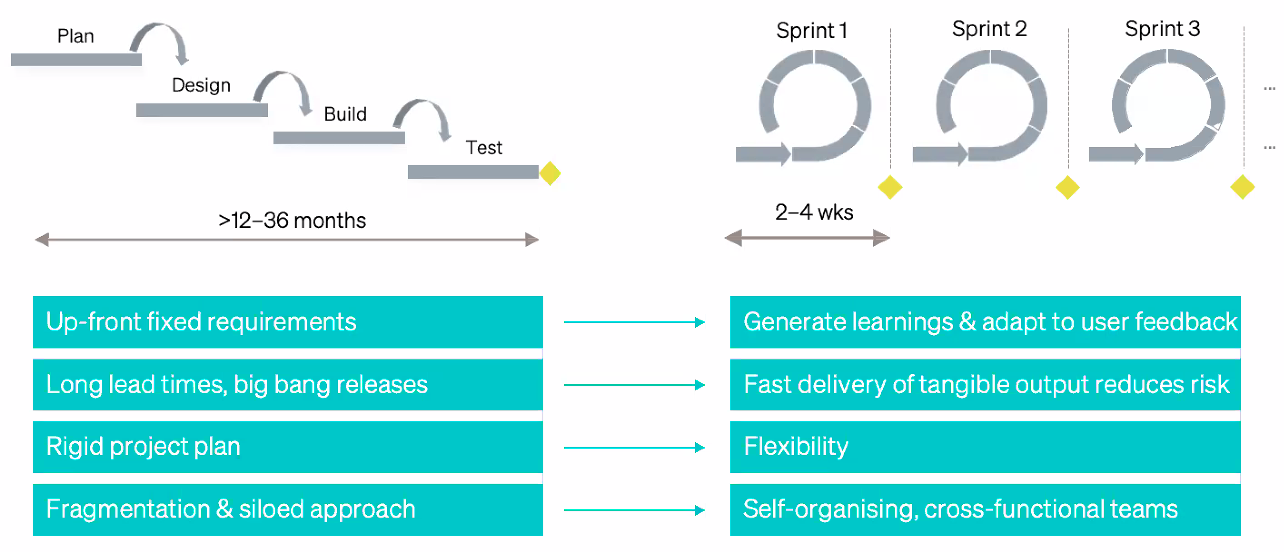
Waterfall
project focus with a sequence of development phases, resulting a final product at the end
but agile has a product focus with short iterations, resulting in regular deployment and improvement, and working outcomes at the end of each sprints
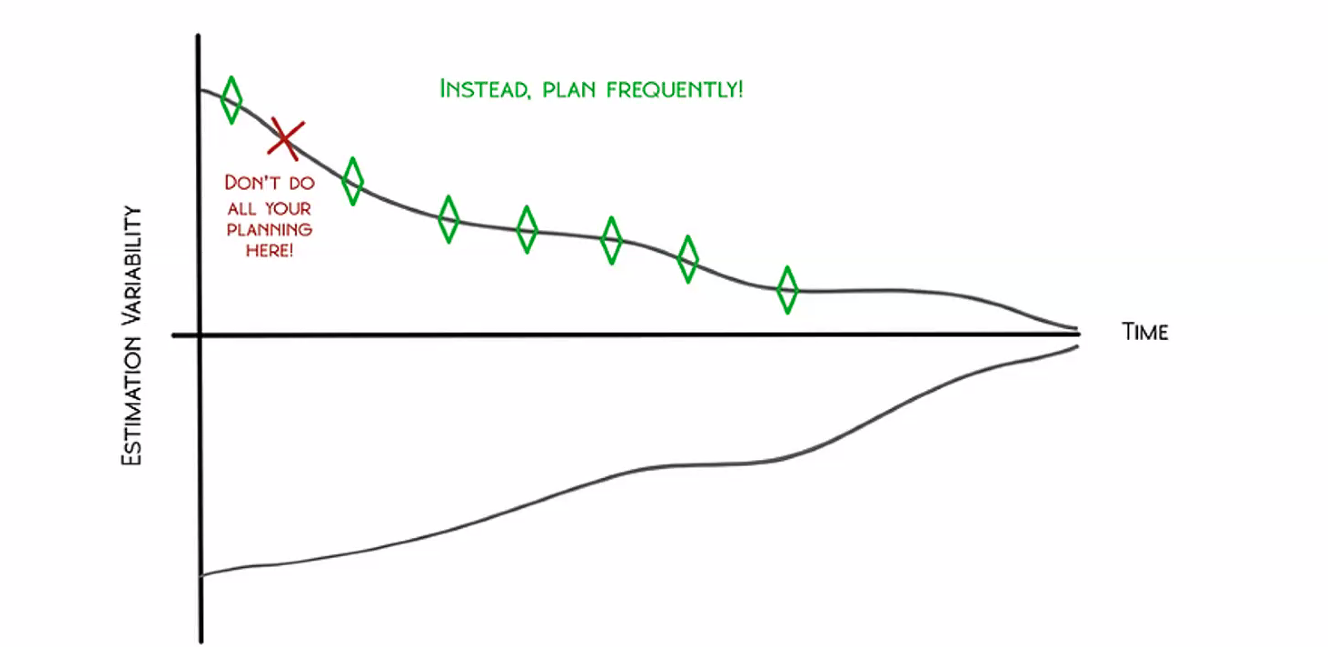
Estimates & Planning
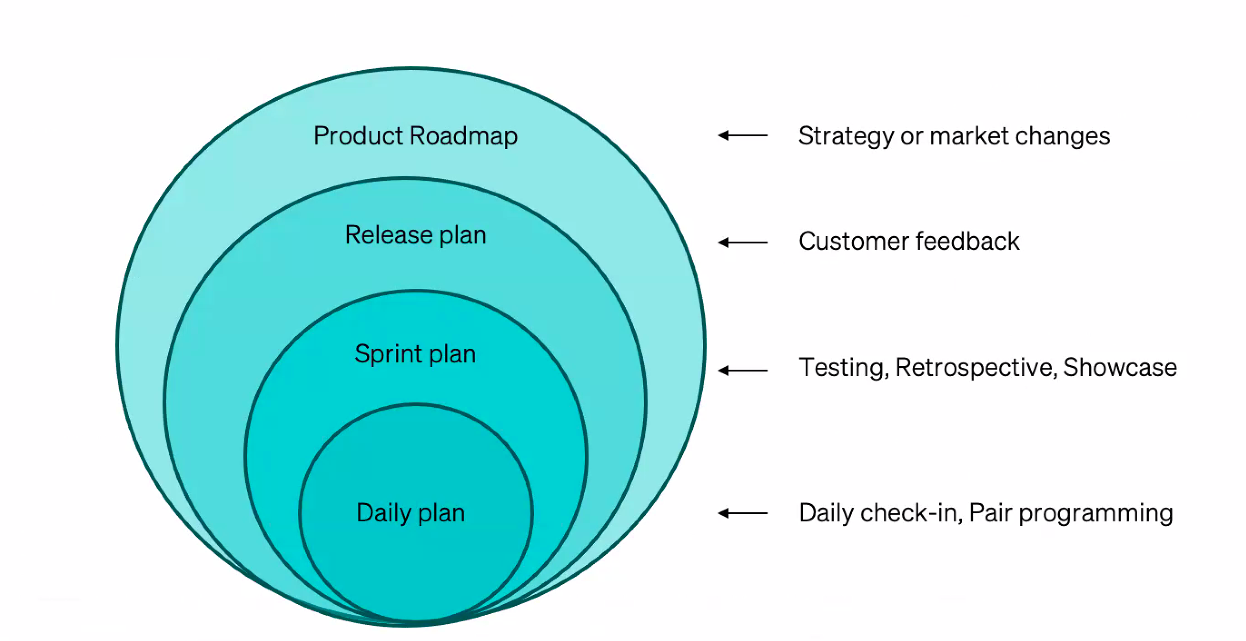
Your plans will get much better as it goes, so plan often and adjust.
Agile @SpaceX
Nasa’s launch cost for a rocket is $2 Billion
SpaceX’s launch cost is currently $30 Million and reusable.
It welcome changes -> Rapid iterative design
Deliver value frequently -> Design software integrated with hardware printers, one Raptor engine a day for testing now
Reflect and adjust -> Use test flights to fail fast
Technical excellence & maintain simplicity -> Minimise waste by re-using rockets, Continuous simplify the raptor engine
Successful Agile in action
Project Charter
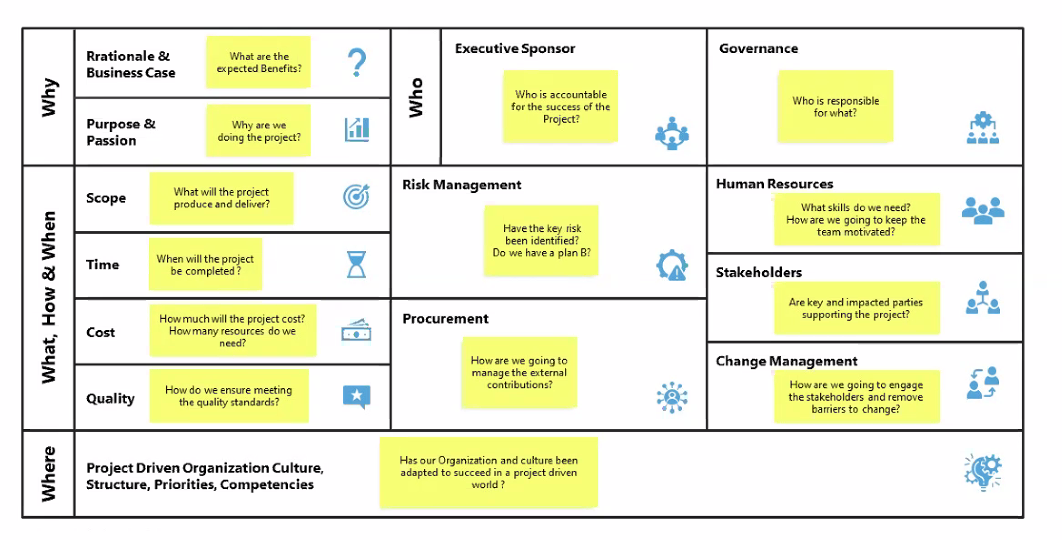
Project Backlog
Create activities, capture the value you plan to deliver, break the work down
Back log of logs, now priorities it
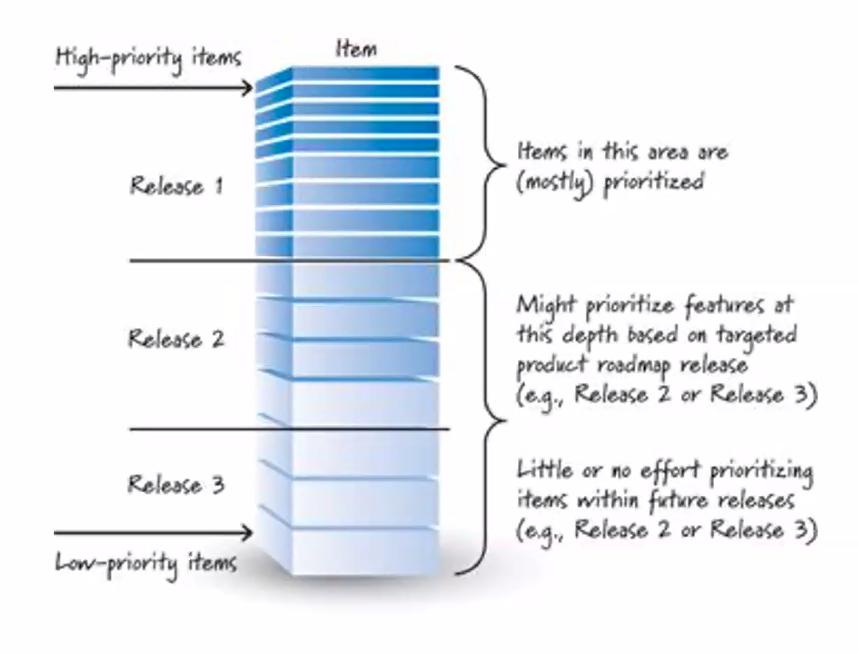
Higher the backlog soon it needs to be included in sprints, more detailed, smaller and ready the User stories are.
Work Breakdown Structure
SAFe example 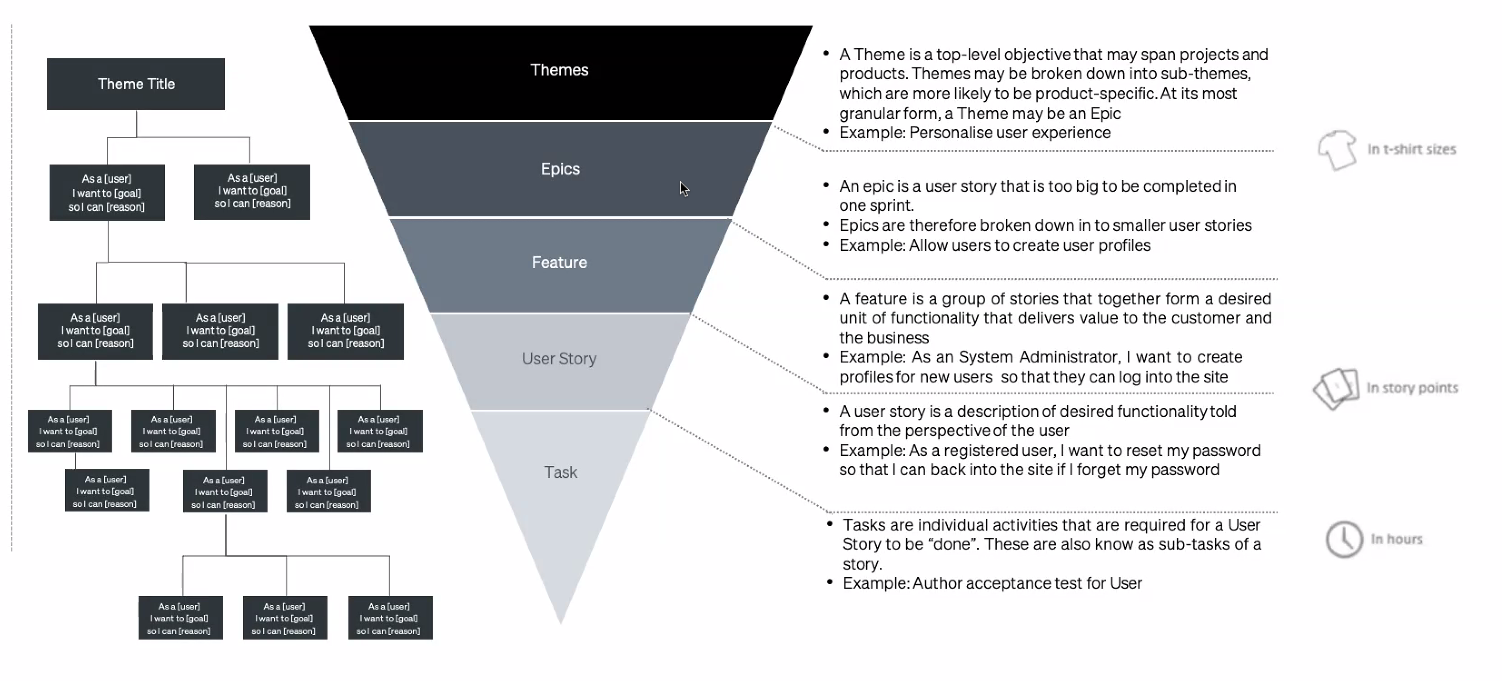
User story hierarchy helps teams organise their work into smaller batches of work.
No definitive user story hierarchy, every org’s interpretation is slightly different
MVP
first version of product, with just enough features to be usable by early customers who can provide feedback for future product development
User story map
Great way of communicating with stakeholders Ex) Outlook 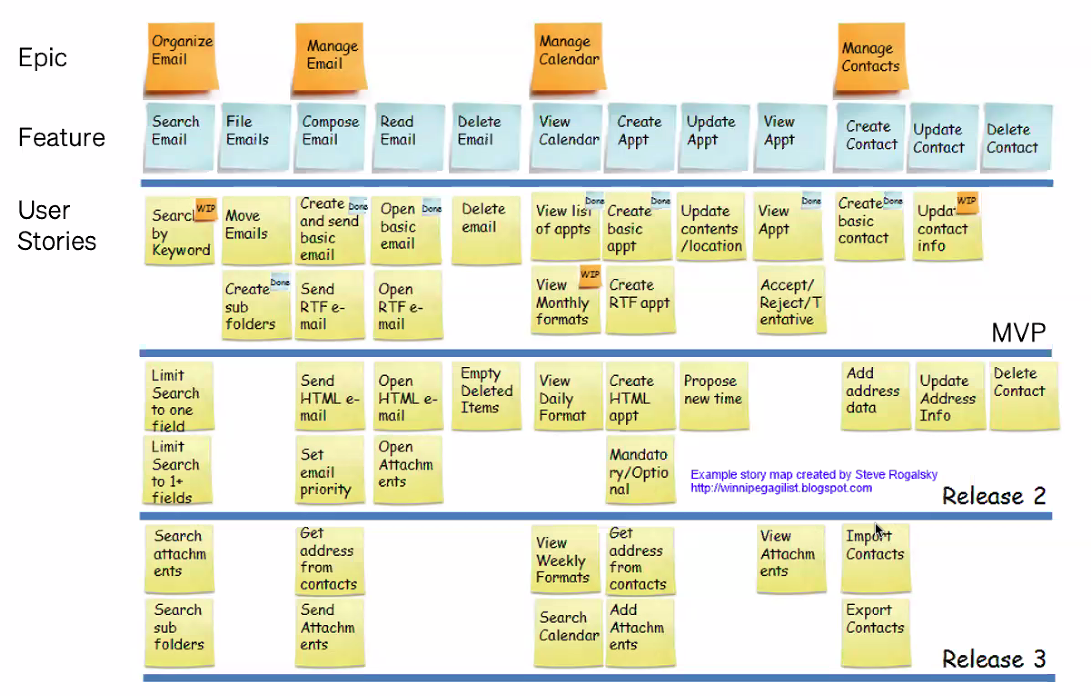
Use scrum to deliver in sprints
Planning horizons & feedback cycles
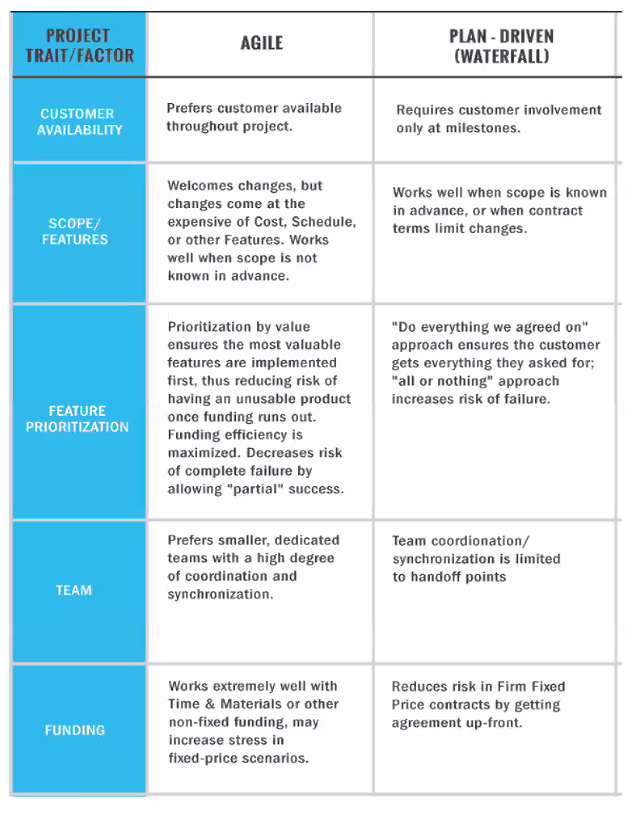
when agile? when waterfall?
##