Project Management Week 7 (32541)
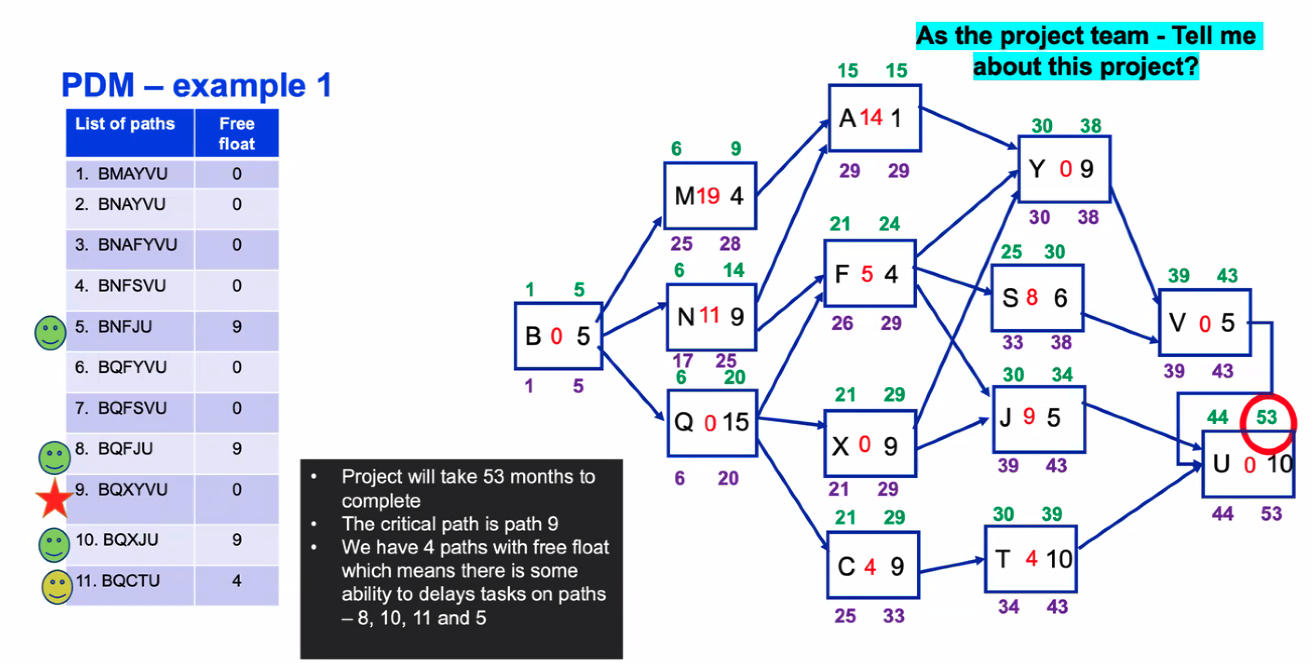
Free float
ES (of successor) - EF (of current activity)
Total float
LS - ES or LF - EF
Risks
possibility of something that can occur that affect your project negatively
involves uncertainty about the effects/implications of an activity. but it can also be positive (opportunity)
Opportunity
something unplanned could exploit to have a positive impact on your project.
Known
Expected
Unknown
Unexpected
What is risk management
structured approach to go looking for uncertainties and their effect on objectives
coordinated activities to direct and control an organisation with regard to risk
Why manage risk
CAUSE - RISK EVENT - EFFECT => COST, TIME, SCOPE, QUALITY
Increase probability & impact of positive events
Decrease probability and impact of negative events
Risk management plan
identify risk, go through all possible, why its significant, what is to be done to reduce/increase it?, when will the risk have its impact in the project who is responsible for resolving, how the reduction/increase will be achieved, how much cost it will take to resolve.
Risks are monitored against the plan as a part of the routine control of the project.
PSR ( project status report) on monthly basis, high critical risks, report to senior manager and they’ll get understand what needs to be done going forward.
Risk management process
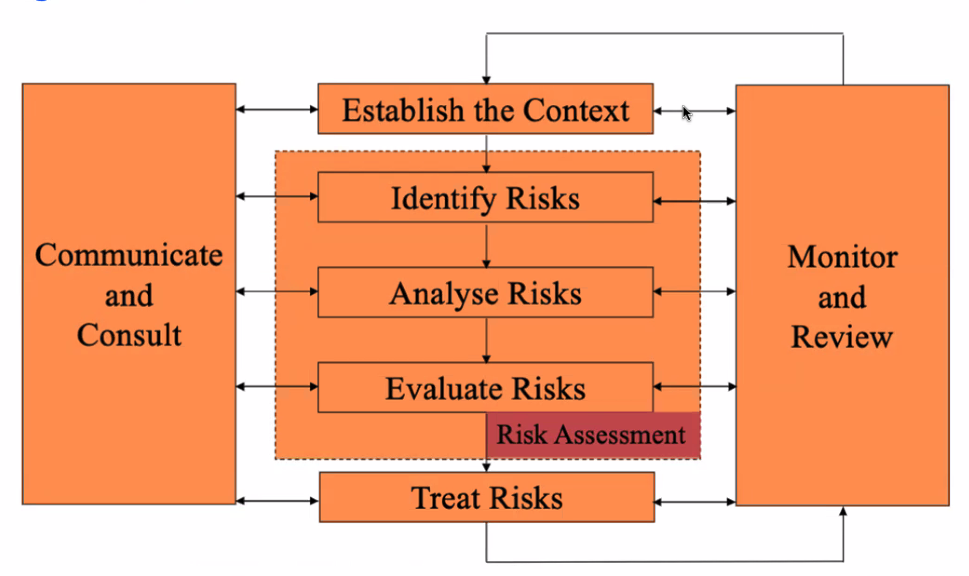
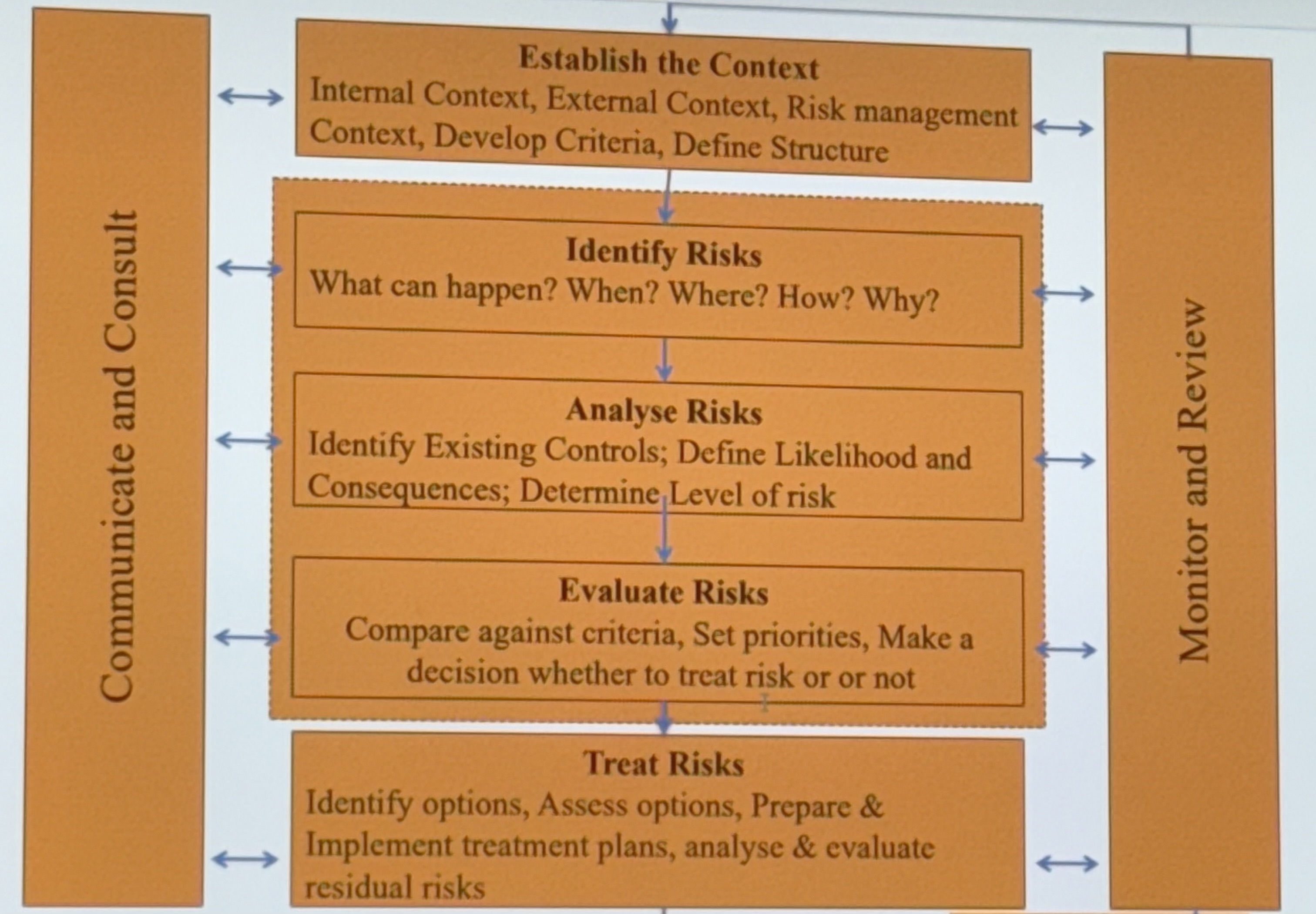
Communicate and Consult :
exchange idea, info between stakeholders, objectives, improve understanding, awareness of roles & responsibilities and trust.
Establish context
External: SWOT, key business drivers
Internal: culture, objectives, stakeholders, structure, capabilities of resources, goals
Risk management context: determine scope of what RM exercise applies to, depth and breath, decide on relationships between
Establish risk criteria: define likelihood, infidelity and measure causes and consequences, how level of risk is determined level where risks become acceptable what criteria to use. - maybe affected by perceptions of stakeholders
Define structure: ensure significant risks are not overlooked, separating activity, function , process in to elements that provide framework for identification and analysis (use wbs as starting point)
Risk assessment
Risk identification: identify what the risk events are, identify source, areas of impact, cascading or cumulative effects, generate list, get everything, consider causes and scenarios
tools for identification >
checklists, records, experience, brainstorming, expert advice (SME), systems analysis, modelling.
(risk grouping) :physical, financial, legal, moral/ethical
(risk grouping 2): WBS of risks (technical, external, organisation, project management)
(risk grouping 3): Partial risk profile for product development project (on every aspects)
Risk analysis: important for assigenment Identify controls (factors affecting likelihood & consequences), identify likelihood, check causes sources, identfiy consequence (+ -), identify level of risk
Types of analysis> Qualitative : describing (when generally risk is low or quantitative is unavailable), semi-quantitative, Quantitative: numbers against it, combination
table, graph, decide on when to use one another.
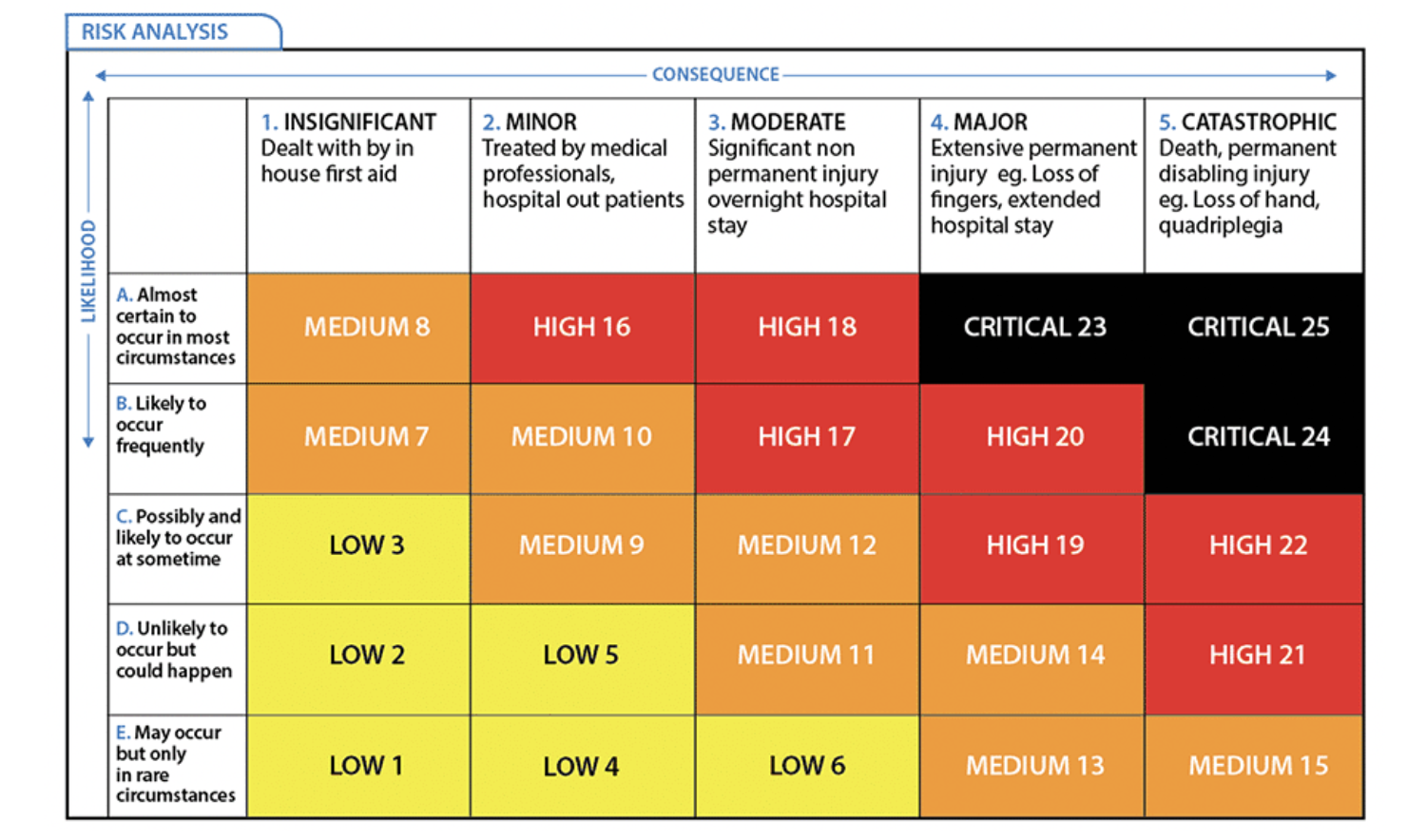
likelihood categories > have to define it.
Almost certain, likely, possible, unlikely, rare
consequence scale > have to define and example too
insignificant, minor, moderate, major, catastrophic
Risk matrix